 Skip to content

Signs You Need to Hire an Additional Maintenance Technician for Your Property
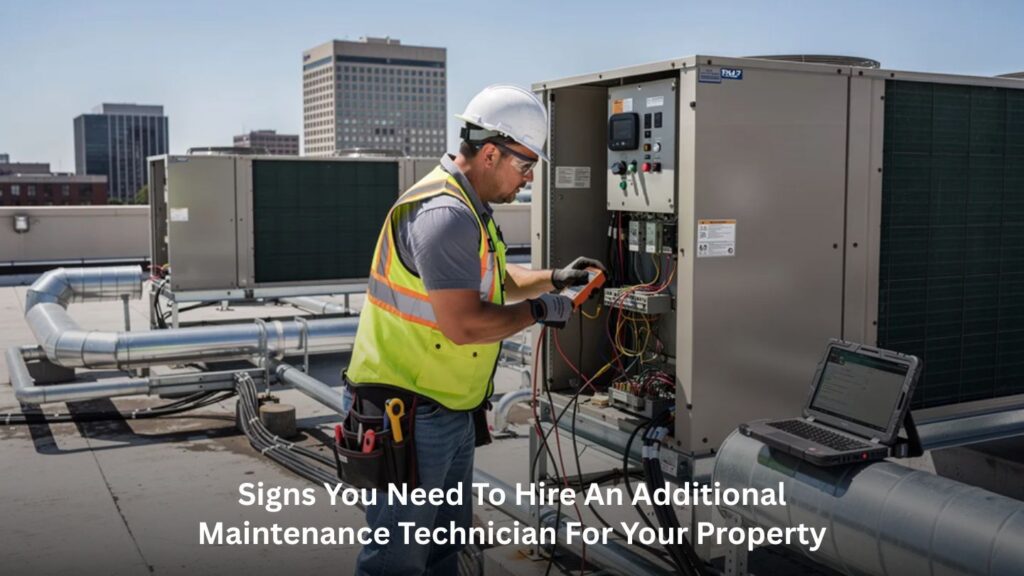
Efficient maintenance operations are essential for keeping rental properties safe, functional, and appealing to residents. As properties grow and daily repair requests increase, maintenance teams often face greater pressure to keep up with tasks. Delays in handling work orders or recurring issues can quickly affect resident satisfaction and property performance. Recognizing the early signs of an overburdened maintenance team helps property managers maintain service quality and prevent operational setbacks. In this blog, we will discuss the key indicators that signal it may be time to expand your maintenance team to support your property effectively.
Key Takeaways
- Work order backlog exceeding 25-30 open tickets or completion times slipping past 3-4 days signals your current maintenance staff is at capacity
- Growing portfolios—jumping from 50 to 150 units or adding a second commercial building—typically require additional maintenance technicians to maintain service quality
- Delayed repairs increase costs significantly: emergency repairs cost 2-5x more than scheduled maintenance, and deferred upkeep hurts tenant satisfaction and renewals
- Rising vendor invoices for basic tasks like clogged drains or fixture replacements often indicate internal capacity gaps, not specialized needs
- An additional tech enables a shift from reactive firefighting to planned preventive maintenance, reducing long-term costs and compliance risks
Why an Extra Maintenance Technician Can Be a Turning Point
Most property owners start the same way: one generalist tech handling everything, or doing repairs themselves. For a small portfolio—say, under 50 units or a single building with straightforward systems—this approach typically works. But growth changes the equation. Once you’re managing 100-200 units, adding a second building, or dealing with mixed-use space, single-tech capacity often cannot keep pace with the volume, variety, and time pressure required.
Consider the common scenarios. A 120-unit apartment community with garden-style layouts generates a steady stream of routine maintenance requests, unit turns, emergency calls, and grounds work. A mixed-use building with street retail and offices demands maintenance techs comfortable with different system types—from commercial HVAC to retail storefronts. A 60,000 sq. ft. warehouse involves loading docks, overhead doors, and specialized equipment that add complexity.
1. Work Orders Are Piling Up Faster Than You Can Close Them
A growing work-order backlog is one of the clearest indicators that you need another technician. When your maintenance staff regularly carries more than 25-30 open non-emergency tickets, or average completion times slip beyond 3 business days, you’re looking at a capacity problem—not a performance issue.
The pattern shows up in specific ways: repeated tickets for leaky faucets that sit open for days, flickering lights in hallways that tenants report multiple times, and recurring HVAC complaints that linger for a week or more. Seasonal spikes make this worse. Air conditioning failures every July-August or heating issues every December-February can reveal that existing staffing cannot handle peak demand.
An additional tech can reduce backlog, speed up first-response times, and help maintain a 24-48 hour standard for most routine maintenance requests. Industry benchmarks suggest average completion times around 3-4 days for standard repairs. When you consistently exceed 6-7 days, research shows tenant turnover risk increases significantly.
Recognizing what does non certified maintenance technician does can also clarify how entry-level technicians support routine repairs, inspections, and work orders while helping reduce the workload on senior maintenance staff.
How to Spot a Work-Order Capacity Problem
Your property management software holds the answers. Review these metrics over the last 3-6 months:
| Metric | Healthy Range | Warning Sign |
| Average days to complete | 2-4 days | 5+ days |
| Open work orders per tech | Under 25 | 30+ consistently |
| Repeat tickets (same issue) | Under 10% | 15%+ |
| Overdue work orders | Under 15% | 25%+ |
Consider this example: a 90-unit building consistently running 40+ open tickets, with residents waiting 5-7 days for non-urgent repairs. That’s not a scheduling issue—it’s a staffing problem. Also track after-hours calls and weekend emergencies. If your tech handles 8+ emergency calls in a single holiday week, the workload is unsustainable.
2. Tenant Complaints and Online Reviews Are Increasing
Slow maintenance response directly impacts tenant satisfaction. When complaints about delayed repairs start appearing in reviews—phrases like “maintenance keeps getting delayed,” “never get a callback,” or “the AC took a week”—you’re seeing the consequences of stretched capacity.
Even if your technician is highly skilled, sheer volume creates delays that look like neglect to customers. Data from national property management surveys shows that the average time to address standard maintenance requests is about 3.4 days. Exceed that consistently, and dissatisfaction climbs. One study found that 56% of tenants say they would renew if maintenance responses improved—a clear line connecting staffing to your bottom line.
Adding a maintenance tech improves communication, shortens response time, and protects your online reputation. Faster service translates to better reviews, higher renewal percentages, and lower vacancy costs in the long run.
Warning Signs in Resident Feedback
Look for patterns across multiple channels:
- Annual resident surveys: Recurring comments about dirty common areas, unfinished repairs, or deferred cosmetic fixes
- Mid-lease satisfaction checks: Declining scores on maintenance-related questions
- Public reviews: Three or more reviews in the last quarter specifically calling out maintenance delays
Pay attention to safety-related complaints—broken locks, inadequate lighting, and malfunctioning electrical issues. These signals include both capacity problems and potential liability. When staffing improves, you often see complaint trends reverse within a single leasing cycle.
3. Preventive Maintenance Keeps Getting Pushed Aside

There’s a critical difference between reactive repairs (fixing what’s broken) and planned preventive maintenance on building systems like HVAC, boilers, elevators, and fire safety equipment. When your tech is constantly dealing with daily calls—clogged drains, door hardware, appliance issues—structured PM schedules suffer.
Common tasks that slip when capacity is tight:
- Quarterly HVAC filter changes
- Annual boiler inspections
- Roof checks every spring and fall
- Monthly emergency lighting tests
- Regular inspections of fire safety equipment
The risk of skipping PM is significant. Emergency repairs cost 3-4x more than scheduled work. Surprise breakdowns lead to larger capital expenses. And safety or code violations create legal exposure. Research indicates that a well-implemented preventive maintenance program can reduce overall maintenance costs by 12-18% and deliver roughly 400% ROI over time.
An additional technician allows one person to focus on PM and projects while the other handles daily work orders. This division of labor is often the turning point for moving from reactive firefighting to a proactive approach.
Checklist: Are You Falling Behind on PM?
Review your PM logs for the past 12 months. Warning signs include:
- Manufacturer-recommended service intervals missed for HVAC units
- Elevator inspections are overdue or completed at the last minute
- Boiler service records with gaps of 6+ months
- Fire extinguisher tags showing missed inspection dates
- Emergency lighting without documented monthly tests
4. Your Existing Technician Is Constantly on Call and Burning Out
Workload sustainability matters. When one maintenance tech covers a 24/7 on-call rotation for multiple properties, burnout becomes inevitable. Long days, frequent weekend calls, and the inability to take time off without leaving the property exposed are clear signs of staffing pressure.
Watch for these patterns:
- Regularly exceeding 45-50 hours per week
- Frequent calls between 10 p.m. and 6 a.m.
- Repeated requests to delay or cancel vacation
- Non-urgent tasks consistently postponed because “there’s no time this week.”
Burnout consequences extend beyond the individual. Work quality drops. Short-term fixes replace complete repairs. Safety incidents become more likely. And when your overworked tech eventually resigns—often without much notice—you’re left with no coverage at all.
A second technician allows shared on-call schedules, better rest, and more consistent performance. The quality improvement alone often justifies the investment.
Operational Red Flags in Your Tech’s Schedule
Review overtime costs over the last 6-12 months. If overtime consistently runs high, an additional full-time hire may actually save money compared to premium pay rates. Calculate the math:
- Overtime premium (typically 1.5x base rate)
- Weekend/holiday rates
- After-hours vendor call-outs when your tech is unavailable
Compare these costs to the salary and benefits of another team member. In many cases, the numbers favor expanding your maintenance team rather than continuing to stretch one person beyond sustainable limits.
5. Property Condition and Curb Appeal Are Declining

Visible wear and tear—both interior and exterior—often reflects insufficient maintenance bandwidth rather than simple neglect. When emergencies consume the schedule, cosmetic and non-urgent projects get delayed indefinitely.
Common signs of deferred upkeep:
- Stained corridor carpets
- Peeling paint on exterior surfaces
- Rusted railings and faded parking lot lines
- Cracked sidewalks
- Overgrown landscaping
- Scuffed lobby walls
- Broken or mismatched light fixtures
These issues hurt leasing efforts immediately. Prospective tenants notice worn conditions during showings. Office tours feel less professional. Renewal conversations become harder when residents see visible signs that the building isn’t being cared for.
Hiring another technician creates capacity to tackle the backlog of appearance-related projects. Paint gets touched up. Light fixtures get replaced. Common areas stay clean. These improvements preserve long-term property value and support stronger rents.
Common Signs of Deferred Upkeep
Small items often indicate broader resource constraints:
- Loose door hardware that’s been reported multiple times
- Squeaky gates or entry doors
- Damaged or faded signage
- Janitorial services tasks are falling behind
- Common area cleanliness slipping between cleanings
Conduct a quarterly walk-through with a detailed checklist. Track how many items remain unresolved from one quarter to the next. If the same issues keep appearing, your current maintenance staff simply doesn’t have the bandwidth to address them.
6. You’re Expanding Your Portfolio or Adding New Facilities
Portfolio growth rarely scales linearly with existing maintenance capacity. Acquiring a second 80-unit building or developing a new 30,000 sq. ft. warehouse adds workload that one technician typically cannot absorb—especially when new properties have different systems requiring time to learn.
Examples of growth that strain capacity:
- Going from a single property to three across different neighborhoods
- Taking on mixed-use space with restaurant tenants and specialized equipment
- Adding properties built in different decades with varying system types
New buildings may have rooftop units vs. split systems, modern access control, loading docks, or building automation that your current tech hasn’t worked with before. Expecting one person to absorb all added responsibilities usually leads to missed inspections, slower response times, and more vendor call-outs.
The smart approach is hiring before problems appear. Use portfolio growth as justification for adding an additional technician and planning coverage strategically.
Planning Maintenance Staffing During Growth
Industry benchmarks provide useful starting points:
| Portfolio Size | Recommended Techs |
| Under 100 units | 1 full-time |
| 100-200 units | 2 full-time |
| 200-300 units | 3 full-time |
For commercial properties, consider roughly 40,000-60,000 sq. ft. per technician, adjusting for building age and system complexity. Older properties or those with extensive amenities (pools, gyms, rooftop decks) typically need more staff per unit.
When hiring during growth, consider cross-training. Select a new hire with complementary skills—if your current tech excels at plumbing, look for someone stronger in electrical or HVAC. This builds a more capable team overall. If future growth is uncertain, a phased approach using part-time or temp-to-hire arrangements can manage risk.
7. Vendor and Emergency Call-Out Costs Are Rising
Rising invoices from outside contractors often reflect internal capacity gaps rather than truly specialized needs. Review your vendor spend from the last calendar year. How much went to premium weekend rates for minor issues—clogged drains, circuit resets, fixture replacements, or basic plumbing repairs?
If many of these calls could be handled by a skilled in-house technician with the right bandwidth, outsourcing maintenance for these tasks is costing you unnecessarily. Emergency repairs typically cost 2-5x more than scheduled work. After-hours call-outs add trip charges and overtime premiums.
One facility documented avoiding over $50,000 in breakdown-related costs by implementing a proper maintenance plan. The investment in additional staff was far less than the emergency repair bills they eliminated.
8. Safety, Compliance, and Inspection Prep Are Becoming Last-Minute Scrambles

Regulatory and safety requirements demand organized, timely maintenance. Fire inspections, life safety checks, ADA compliance, boiler permits, and lender-required property condition assessments all require documentation and completed work.
Common compliance events include:
- Annual city fire and safety inspections
- Insurance carrier surveys
- Lender-required property condition assessments
- HUD or Section 8 inspections for multifamily assets
- Elevator safety certifications
When maintenance staff is stretched thin, these events become scrambles. Emergency lights get tested days before the inspector arrives. Smoke detectors get replaced at the last minute. Handrails get tightened the morning of the walkthrough.
Repeated scramble mode before each audit is a clear sign that there isn’t enough staffing to ensure safety and manage compliance proactively. An extra tech can maintain inspection checklists, keep logs updated, and address issues throughout the year.
Signs You’re at Risk of Failing an Inspection
Warning indicators include:
- Expired fire extinguisher tags
- Emergency lights without monthly test documentation
- Boiler service records with large gaps
- Missing or incomplete maintenance logs
- Safety notices left unresolved until deadline pressure forces action
The consequences of failing inspections are real: fines, required reinspections, potential shutdowns, increased insurance premiums, and reputational damage. A dedicated or additional technician improves relationships with inspectors by being consistently prepared—turning compliance from a crisis into routine operations.
Deciding What Type of Additional Technician You Really Need
Once you recognize the signs, define the right role. Do you need a generalist, or someone with expertise in a specialty like HVAC or electrical?
Understanding the top apartment maintenance must-have skills list for technicians helps property managers evaluate whether their current technician has the broad capabilities needed to manage plumbing, electrical, HVAC, and preventive maintenance tasks effectively.
Consider your asset type and common repair needs:
| Property Type | Priority Skills |
| Multifamily | Plumbing, appliances, and unit turns. |
| Office | HVAC, electrical, building automation |
| Industrial | Electrical, mechanical, and loading equipment |
| Mixed-use | Generalist with commercial systems experience |
For properties built before 2000, prioritize stronger plumbing and electrical knowledge. Newer assets may need techs comfortable with access control systems and building automation. Also consider scheduling: do you need day-shift coverage, evening presence, or alternating on-call rotations?
Budget by comparing 12-24 months of maintenance spend to project ROI. Factor in expected savings from reduced vendor costs, fewer emergencies, better tenant retention, and improved property condition. Property managers often benefit from understanding what are the different types of maintenance technicians when deciding whether their property requires a general maintenance professional or someone with specialized skills, such as HVAC or electrical systems.
Onboarding and Integrating Your New Tech
A well-planned onboarding period of 30-60 days helps your new hire reach full productivity while easing the workload of existing employees. Key steps include:
- Property tours: Walk every building, unit type, and major system
- System orientation: Document locations and specifications for HVAC, boilers, elevators, and key equipment
- PM plan review: Share preventive maintenance schedules and expectations
- Work order training: Ensure familiarity with your digital work-order system
- Role division: Establish clear responsibilities (e.g., one tech focuses on daily service requests, the other on PM and projects)
Documenting standard procedures ensures both techs can coordinate effectively and cover for each other. Proper training during onboarding prevents costly mistakes and builds a professional maintenance service that your residents will notice. Expanding your team also becomes easier when managers have a clear understanding of what a maintenance technician is and how those responsibilities contribute to efficient property operations and faster service for residents.
Strengthening Property Operations with the Right Maintenance Support
Recognizing when to expand your maintenance team is essential for maintaining property efficiency and resident satisfaction. As work orders increase and response times slow down, additional support can help ensure repairs are handled promptly and property standards remain high. Proactively hiring another technician helps protect property value, reduce delays, and keep daily operations running smoothly.
OnSite Property Solutions provides opportunities for professionals seeking maintenance technician jobs in Macon, helping connect skilled technicians with properties that need reliable maintenance support. Our expertise in property staffing and maintenance placements helps communities maintain strong operational performance. Explore opportunities with us today and take the next step in your maintenance career.
Frequently Asked Questions
How many units or how much space can one maintenance technician realistically handle?
Ballpark ranges suggest 80-120 apartment units per technician in average condition, or roughly 40,000-60,000 sq. ft. of typical office or industrial space. However, building age and system complexity matter significantly. Older properties, student housing, or buildings with extensive amenities like pools and gyms may require more maintenance staff per unit. Don’t rely solely on unit count—factor in your actual volume of service requests and preventive maintenance requirements to get an accurate picture.
Should I hire a full-time technician or start with part-time or on-call support?
If work-order volume and PM backlog are consistently high, a full-time hire is usually more effective and predictable. Part-time or temp-to-hire arrangements work better when portfolio growth is new, seasonal, or uncertain over the next 12 months. On-call-only arrangements typically don’t solve daytime workload issues or preventive maintenance gaps—they simply provide after-hours coverage. Evaluate your core business needs before deciding.
How do I know if I should hire another in-house tech instead of outsourcing to a maintenance company?
In-house hires offer more control and daily presence, which is valuable for larger single sites or dense portfolios where you need someone to manage issues as they arise. If your needs are occasional, specialized, or spread across distant locations, outsourced professional help or specialized vendors may still be the better option. Compare internal staffing costs—salary, benefits, tools, training—with 12-24 months of vendor invoices for similar work to make an informed decision.
What skills and certifications should I look for in an additional maintenance technician?
Core skills include basic plumbing, electrical troubleshooting, carpentry, and HVAC knowledge, plus familiarity with local building and safety codes. Valuable certifications depend on your property systems: EPA 608 certification for HVAC refrigerant handling, boiler licenses, or relevant electrical qualifications. Prioritize candidates experienced with digital work-order systems and preventive maintenance scheduling—these tools improve efficiency and coordination across your team.
How can I measure whether the extra technician is delivering a return on investment?
Track metrics including reduced work-order completion time, fewer repeat issues, lower vendor and emergency call-out costs, and improved tenant satisfaction scores. Compare maintenance spend, complaint volume, and renewal rates over the 6-12 months before and after hiring. Set clear performance goals during onboarding—specific targets for response times, PM completion rates, and tenant feedback—so you can evaluate the new hire’s impact objectively and demonstrate the benefit to your operations.
About The Author
