 Skip to content

Skills to Look for When Hiring Property Accountants in Atlanta
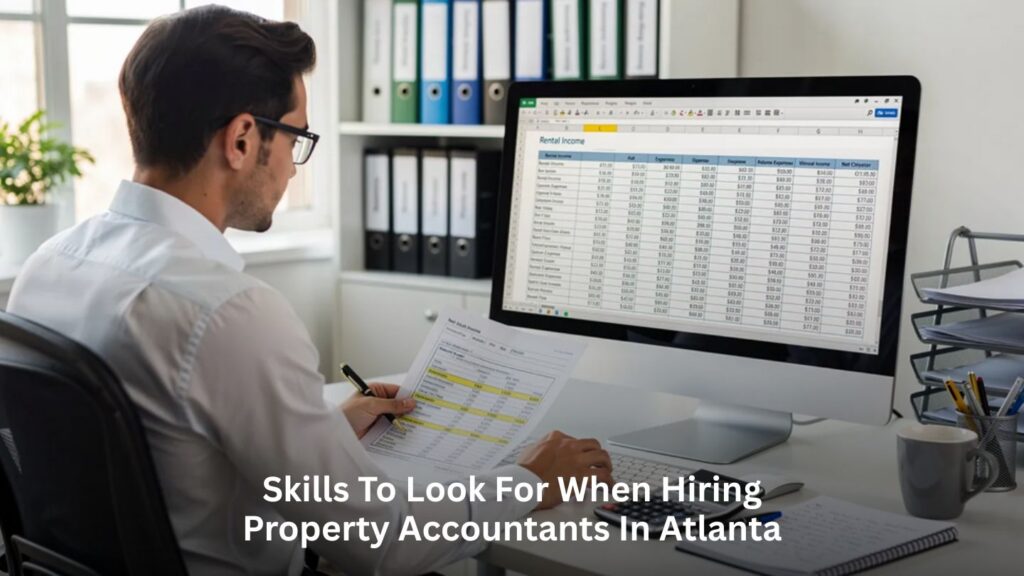
Finding qualified property accountants in Atlanta’s competitive multifamily market directly impacts your bottom line. With rising property taxes, escalating insurance costs, and tight margins across the metro area, the skills to look for when hiring property accountants in Atlanta go far beyond basic bookkeeping. A single misclassified expense or CAM reconciliation error can cost thousands and damage investor confidence.
Property accountants serve as the financial backbone of your properties, managing everything from rent roll accuracy to Georgia state tax compliance. They translate complex financial data into actionable insights for property managers, owners, and auditors. For hiring managers and property management companies, understanding exactly which technical skills, soft skills, and industry knowledge to evaluate makes the difference between a successful hire and costly turnover.
This blog breaks down the essential competencies, certifications, and experience markers that distinguish exceptional candidates from merely adequate ones in the Atlanta market.
Key Takeaways
- Technical accounting skills and property management software proficiency are non-negotiable for handling complex multifamily portfolios
- Strong communication skills and time management abilities separate good candidates from great ones during high-pressure reporting periods
- Atlanta market experience and knowledge of Georgia tax laws provide significant advantages in property valuation and compliance
- Attention to detail and ethical decision-making protect your property investments from costly errors and legal exposure
- Industry certifications like CPA, CAM, or ARM, and continuing education demonstrate commitment to excellence and reduce ramp-up time
Essential Technical Skills for Property Accountants
Property accountants require a combination of soft skills, such as communication and problem-solving, and hard skills, including financial management and knowledge of accounting software. When evaluating candidates, prioritize those who demonstrate mastery across these core technical competencies.
Core Accounting Competencies
Every qualified property accountant must prepare financial statements with precision, income statements, balance sheets, and cash flow reports that accurately reflect property performance. Candidates should possess a strong understanding of GAAP (Generally Accepted Accounting Principles) and specialized standards like ASC 842 for lease accounting, which governs how right-of-use assets and lease liabilities appear on balance sheets.
Look for candidates who can interpret variances between budget, actual, and prior period results. For multifamily properties, these variances often stem from occupancy shifts, utility cost fluctuations, or maintenance expenses. The ability to analyze financial data and identify trends gives property managers the insights they need for strategic decision-making.
Month-end, quarter-end, and year-end close processes require expertise in reconciliations, accruals, deferred revenue, depreciation, and fixed asset management. Most property accounting positions require 2–5 years of relevant experience in real estate accounting or property management to handle these responsibilities competently.
Property Management Software Expertise
Strong proficiency in property management software is frequently required among candidates in this field. Knowledge of accounting software, such as QuickBooks and specialized property management software like AppFolio, is essential for property accountants to perform their daily tasks efficiently.
Beyond platform familiarity, assess candidates’ ability to import and map legacy accounting data, manage general ledger structures, and handle trust accounting, separating tenant and owner funds properly. Candidates should also demonstrate advanced skills in Microsoft Excel, including pivot tables, lookups, macros, and financial modeling capabilities.
Budgeting, Forecasting, and Financial Reporting
Property accountants are responsible for managing the financial aspects of real estate properties, which include tracking income, expenses, and budgets. They prepare financial reports, reconcile accounts, and ensure compliance with accounting standards and regulations.
Strong candidates create comprehensive property budgets covering both income (rent roll projections, ancillary income) and expenses (fixed and variable costs). They forecast cash flow with accuracy, accounting for rent escalations, inflation, vacancy assumptions, and capital expenditure reserves.
Reporting to owners and investors requires standardized owner statements and performance metrics, either per property or across entire portfolios. Candidates must be detail-oriented to ensure accuracy in financial reporting and identify discrepancies before they compound into larger problems.
Property-Specific Accounting Knowledge

Beyond general accounting competencies, property accountants need specialized knowledge unique to real estate finance and property management.
Rent Roll Management and Lease Accounting
Managing rent rolls means tracking actual rent versus budgeted amounts, forecasting based on lease expirations, renewals, and concessions. Candidates should understand lease incentives, rent abatements, and escalation clauses thoroughly.
Proficiency in managing Common Area Maintenance (CAM) reconciliations and lease administration is essential for property accountants. With industry data suggesting that approximately 40% of CAM reconciliations contain material errors, hiring someone who can accurately parse lease clauses, including CAM caps, gross-ups, and controllable versus uncontrollable expenses, protects your properties from tenant disputes and audit findings.
Security Deposit and Escrow Management
Property accountants also handle tenant billing, manage lease agreements, and assist with tax preparation for properties. This includes tracking security deposits, proper escrowing per Georgia regulations, processing returns, and maintaining separate ledgers for compliance. Hiring managers should also coach new hires on what not to do during or after a job interview so that promising candidates don’t undermine themselves in competitive searches.
Property Tax Assessments and Appeals
In Georgia, properties are assessed at 40% of fair market value unless they qualify for special classifications. There is high demand for candidates familiar with the commercial real estate market in Atlanta, candidates who understand county assessor procedures, filing deadlines (typically January through April), available exemptions (homestead, historic, conservation), and the appeals process across Fulton, Cobb, and DeKalb counties.
Critical Soft Skills to Evaluate
Technical expertise alone doesn’t guarantee success. The most effective property accountants combine hard skills with equally important soft skills that enable collaboration and accuracy under pressure.
Communication Skills
Effective communication skills are crucial for translating complex financial data to non-financial stakeholders in property management. Property accountants must explain CAM statements, lease terms, unusual variances, and billing disputes clearly and diplomatically.
Effective communication is crucial for property accountants as it helps in conveying complex financial information clearly to colleagues, management, and clients. They collaborate with property managers and other departments to ensure accurate financial records and reporting. Evaluate both written communication (reports, memos, audit documentation, tenant correspondence) and verbal abilities (meetings with vendors, auditors, tax assessors).
Time Management and Organizational Skills
Time management skills are essential for meeting strict monthly and quarterly reporting deadlines in property accounting. Candidates must demonstrate the ability to prioritize tasks effectively while handling multiple properties with differing closing cycles and varying lease dates.
Seasonal workloads often spike dramatically during year-end property tax appeals, audit season, and lease renewal periods. Strong candidates maintain throughput without sacrificing accuracy. Ask about their strategies for managing competing deadlines.
Problem-Solving and Adaptability
Property accounting frequently involves investigating discrepancies between estimates and actuals, bank reconciliations, and tenant ledger issues. Look for candidates who can diagnose root causes and implement process improvements.
Adaptability matters increasingly as the industry evolves. Software platforms update regularly, lease accounting standards change (like ASC 842 implementation), and Georgia tax laws shift. Candidates who demonstrate learning agility and recent training provide long-term value, and many job seekers rely on temp agencies to navigate the hiring process efficiently as they move between roles and build their skills.
Attention to Detail and Ethics
Small errors compound quickly: misposted invoices, misclassified expenses (capital versus operating), incorrect allocations. Ensuring accuracy across sensitive financial information protects both your properties and investor relationships.
Ethical decision-making prevents serious exposure, misuse of security deposits, misrepresenting numbers to investors, or improper handling of trust funds, which can lead to legal consequences. Evaluate candidates’ understanding of process controls, segregation of duties, and audit trail maintenance.
Common Mistakes to Avoid
When interviewing a property accountant, it’s important to ask questions that assess their technical skills, knowledge of accounting software, and behavioral traits such as communication skills and attention to detail. Understanding the different types of interviews used in the hiring process can also help you structure conversations that reveal how candidates think and perform. Avoid these common evaluation errors:
- Overlooking cultural fit and team collaboration abilities, Behavioral questions that relate to the company’s culture and values are essential during the interview process to ensure that the candidate is a good fit for the organization
- Focusing only on technical skills without evaluating work ethic. During the initial screening stage of the interview process, ask open-ended questions related to the candidate’s qualifications and experience in the property accounting industry to help them expand on their resume information
- Ignoring candidates’ ability to handle high-pressure situations, Month-end closes, annual tax deadlines, and reconciliation windows creates significant stress; candidates must demonstrate composure under deadline constraints
- Not assessing adaptability to new software and processes. With increasing automation in property accounting platforms, candidates who embrace technology transitions provide a competitive edge
Industry-Specific Experience and Knowledge

Multifamily Property Accounting in the Atlanta Market
Atlanta’s multifamily sector presents unique challenges: complex rent rolls with varied lease terms, concessions, move-in incentives, high turnover rates, and diverse utility and amenity costs. Candidates with local multifamily experience understand vacancy cycles, renter trends, and cost pressures specific to this market.
There is high demand for candidates familiar with the commercial real estate market in Atlanta who understand the local cost structure, utility expenses, property insurance considerations in flood zones, and property tax variations across Fulton, Cobb, and DeKalb counties. Partnering with a local staffing agency in Atlanta for your hiring needs can make it easier to source candidates who already have this market-specific knowledge.
Georgia State Tax Law and Compliance
Property accountants should have a strong understanding of accounting principles, financial reporting, and tax regulations, which are essential for managing the financial aspects of real estate properties. Georgia-specific knowledge includes:
- Understanding that properties are assessed at 40% of fair market value
- Familiarity with state tax deadlines and filing requirements
- Knowledge of taxable real versus personal property distinctions
- Experience with county assessor procedures and appeals processes
Local Housing Regulations
Multifamily housing in Atlanta falls under federal and local fair housing laws, housing codes, and tenant rights regulations. Property accountants may need to collaborate on audits, ensure financial documentation compliance for subsidized housing programs, or handle government program reporting.
Certifications and Continuing Education
A bachelor’s degree in accounting or finance is typically required for property accountants, with many employers preferring candidates who have a master’s degree or relevant certifications such as a CPA (Certified Public Accountant). Candidates for senior positions are often preferred to hold a CPA (Certified Public Accountant) or CMA (Certified Management Accountant) certification.
In addition to formal education, property accountants often benefit from practical experience in accounting roles, which helps them develop the necessary skills for financial analysis and reporting. Additional valuable credentials include:
- ARM (Accredited Residential Manager) through IREM
- CAM audit training
- Continuing education in lease accounting standards (ASC 842 updates)
- Georgia property tax law workshops
Read More: Best Property Management Staffing Agency in Atlanta, GA
Strengthening Your Property Management Team
Hiring the right property accountant requires more than technical knowledge alone. Strong communication, attention to detail, problem-solving abilities, and industry experience all contribute to efficient financial management and smoother property operations. Businesses that prioritize these skills can improve accuracy, maintain compliance, and support long-term growth within their property management teams.
OnSite Property Solutions provides dependable property accountant staffing in Atlanta for property management companies seeking qualified professionals to support their operations. Our assistant manager staffing,leasing consultant staffing, property manager staffing, and punch technician staffing services help businesses build reliable teams for long-term success. Connect with us today to find skilled staffing solutions tailored to your property management hiring needs.
Frequently Asked Questions
What accounting software skills are most important for Atlanta property accountants?
Property accountants should demonstrate proficiency in property management platforms, along with general accounting software. Advanced Microsoft Excel skills, including pivot tables, lookups, and financial modeling, remain essential. Candidates who show adaptability to diverse accounting software provide the greatest flexibility as your technology needs evolve.
How important is prior multifamily experience versus a general accounting background?
While general accounting knowledge provides a foundation, candidates with direct multifamily property accounting experience in the Atlanta market offer significant advantages. They understand local rent roll complexities, vacancy cycles, and Georgia-specific tax and compliance requirements without extensive training. Most positions require 2–5 years of relevant experience in real estate accounting or property management.
What certifications should I prioritize when hiring property accountants?
CPA (Certified Public Accountant) credentials remain the gold standard, demonstrating mastery of generally accepted accounting principles and auditing standards. ARM (Accredited Residential Manager) and CAM audit certifications indicate specialized property management knowledge. For senior positions, CPA or CMA (Certified Management Accountant) certifications are often preferred and signal commitment to professional excellence.
How do I assess a candidate’s attention to detail during the interview process?
Include practical assessments in your hiring process, have candidates review a mock CAM reconciliation to spot errors, or ask them to interpret lease clauses and simulate billing calculations. During interviews, ask specific questions about how they’ve identified and resolved discrepancies in financial data, and request examples of process improvements they’ve implemented to ensure compliance.
About The Author
